Our Approach to Generative AI
AI Literacy Framework
ATLIS believes that AI literacy is important for effectively engaging with AI. Along with our colleagues at the CEP, we worked to create a framework for AI literacy, which was published in Educause Review. The four-part pyramid structure was adapted from work done by researchers at the University of Hong Kong, which is built from Bloom’s Taxonomy.
The framework is designed to help build a shared understanding of AI across Barnard. It provides a four-level structure for learning AI, explanations of key AI concepts, and questions to consider when using AI.
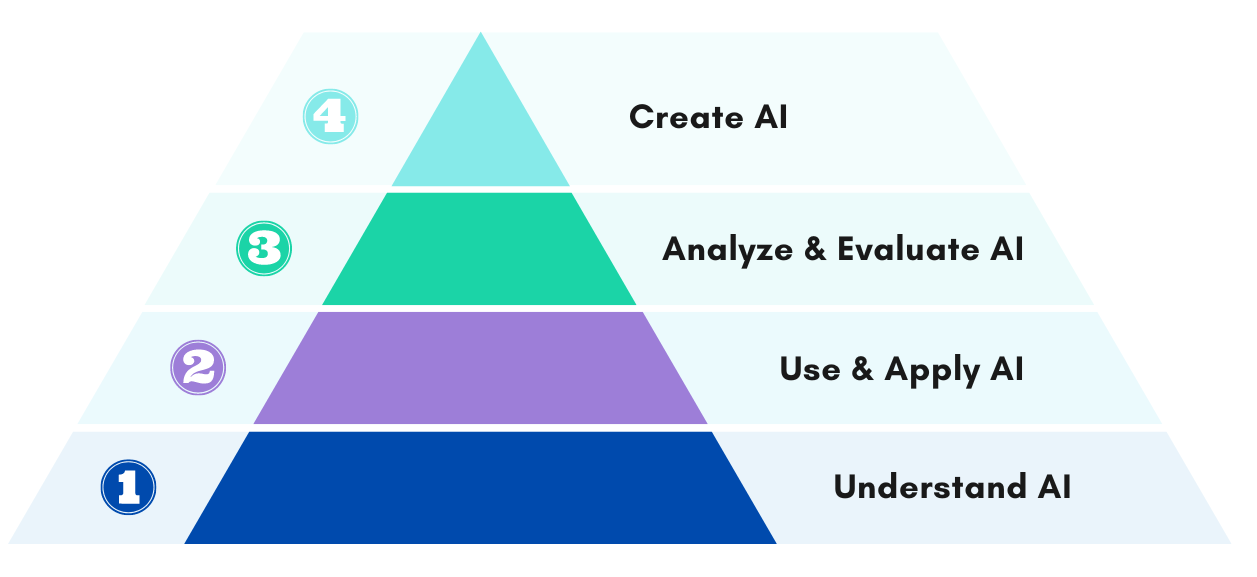
You can use the framework to:
- Determine your own level of AI literacy
- Learn the basics of how AI works
- Facilitate class discussions about AI
- Decide how you want to engage with AI
When applying this framework, it is important to keep in mind that AI is a broad field. There are many types of AI, both real and theoretical. While the information in each level builds on the concepts discussed in the previous level, it is not necessary to learn everything at one level before moving on to the next. The intention is to maintain neutrality with AI use, recognizing that technology literacy can lead to the decision not to use it.
This framework has received national attention, including coverage in Inside Higher Ed; Forbes; Fast Company; and other references. Barnard Communications covered a story on the article in April 2025. Our team has also been engaged in broader conversations about AI literacy with the wider field of higher education (more information on our ATLIS Staff Voices in GenAI & Higher Ed page).